Warehouse returns and holds: keep uncertain stock unavailable
Build a returns disposition process that separates physical receipt, inspection, ownership, credit, and stock release decisions.

Keep returned or uncertain stock unavailable until an approved disposition establishes what it is, who owns it, its condition, and whether it may be used. Physical receipt, inventory availability, customer credit, and supplier claims are separate decisions. A return workflow should connect them without assuming that scanning a carton back into the building makes its contents saleable. Adapt the process for product-specific quality, safety, and legal requirements.
Separate receipt from release
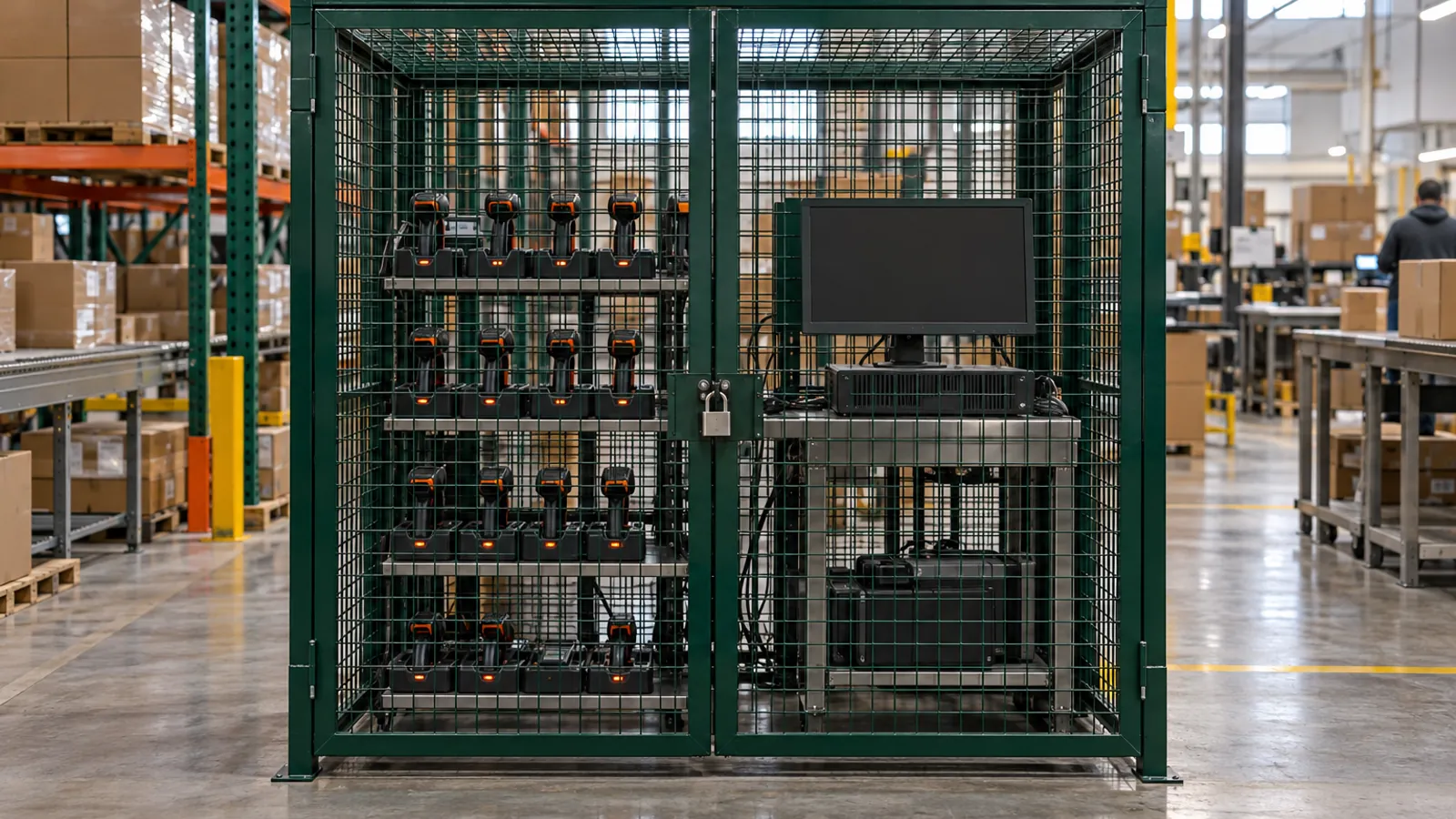
At arrival, record the return reference, expected product, observed quantity, condition, ownership, and required tracking identity. Identify mismatches and unplanned returns. Give staff a controlled place and stock status for goods awaiting inspection. A physical quarantine area and an application hold should support each other; either alone can leave a gap if staff move goods or allocate stock through another path.
Do not use a customer credit decision as an automatic inventory release. Customer service may authorize a refund before the warehouse finishes inspection, or the warehouse may identify usable goods while a commercial dispute remains open. Define the events separately and specify what information crosses systems. Keep the reason for each decision understandable to the teams that rely on it.
Define disposition outcomes
| Outcome | Question to resolve |
|---|---|
| Return to available stock | What inspection and approval are required? |
| Rework or repack | How are identity and quantity preserved? |
| Supplier return | Who authorizes and tracks dispatch? |
| Scrap or disposal | What evidence and approval are needed? |
| Continued hold | Who owns the investigation and next review? |
| Unidentified goods | How is uncertainty isolated and resolved? |
These are example categories, not mandatory legal classifications. Use approved rules for your products and contracts. Define permissions so ordinary receiving staff do not need unrestricted authority to release held goods. Retain the inspection and approval record where required. If the application uses reason codes, ensure they have clear definitions and do not become a substitute for necessary supporting evidence.
Test holds across the full order flow
Place a controlled sample of stock on hold before allocation and verify that it cannot be selected. Then test a hold after reservation, after picking, and before shipment. Determine which open work must be stopped or investigated. A system may treat each state differently, so demonstrate the actual proposed configuration and define an operational response for any unsupported path.
Use an illustrative return of twelve eaches where eight pass inspection, three remain uncertain, and one is damaged. The records should preserve all twelve with the approved statuses and dispositions. Only the approved eight should become available in that scenario. The example is not a recommended inspection sample or quality tolerance; it demonstrates quantity reconciliation across different outcomes.
Connect inventory, finance, and service
Map the return receipt, inspection, credit request, credit approval, stock release, and final disposition to their owners and systems. Define how a quantity difference or wrong item is communicated. Test partial returns, multiple parcels under one reference, and repeated messages. A return interface should not create duplicate stock or credit because an acknowledgment was delayed.
Reconcile the physical goods, WMS stock, order record, and financial treatment where in scope. Ask finance to confirm accounting and credit rules, and qualified specialists to confirm product restrictions. Keep commercial policy distinct from warehouse capability. The WMS can execute an approved rule only if the business has defined that rule and the implementation has tested it.
Monitor aging and repeat causes
Assign an owner and next action to held inventory. Review aging, unresolved identity, repeated damage reasons, missing authorizations, and quantities awaiting disposal or supplier return. Use your own service and product requirements to set escalation conditions. Do not invent a universal number of days after which stock becomes safe, saleable, or eligible for destruction.
Analyze causes without allowing the metric to encourage premature release. A shorter return cycle is not an improvement if uncertain stock is simply reclassified as available. Measure the quality and completeness of disposition as well as elapsed time. Include access review, training, and interface monitoring in the control plan so the process remains reliable after the launch team leaves.
FAQ
Can a returned item be immediately resold?
That depends on its identity, condition, product rules, and approved policy. Do not use physical receipt alone as evidence of suitability. Seek qualified advice for regulated goods.
Is a separate cage enough to control held stock?
It helps physical separation, but the digital status, permissions, allocation paths, and movement procedure also need control. Test them together.
Who should approve release?
Name the role with the appropriate business or quality authority for your products. The person receiving the carton should not be assumed to have that authority by default.
Continue your decision
- WMS operating risks: a practical control map — Map warehouse failure paths to inventory controls, owners, detection signals, and recovery evidence before the next exception.
- Cycle counting in a WMS: investigate before adjusting — Design a count process with movement controls, independent recounts, variance investigation, and an auditable adjustment decision.
- Lot and serial tracking: test traceability through exceptions — Define lot and serial events across receipts, movements, holds, returns, and shipments, and verify requirements with official sources.
- Use the launch readiness checklist to connect this guide to a practical planning task.
- Compare WMS approaches before treating a product category as a complete specification.
Sources and scope
Official pages checked on October 30, 2026. The planning procedures, test scenarios, and worked examples are original editorial guidance, not prescribed standards or evidence of product testing.
- SAP — What is a WMS? — General warehouse execution terminology; supplier education, not independent product evaluation.
- FDA — Food Traceability Rule FAQ — Applicability, exemptions, records, and current compliance and enforcement timing.